

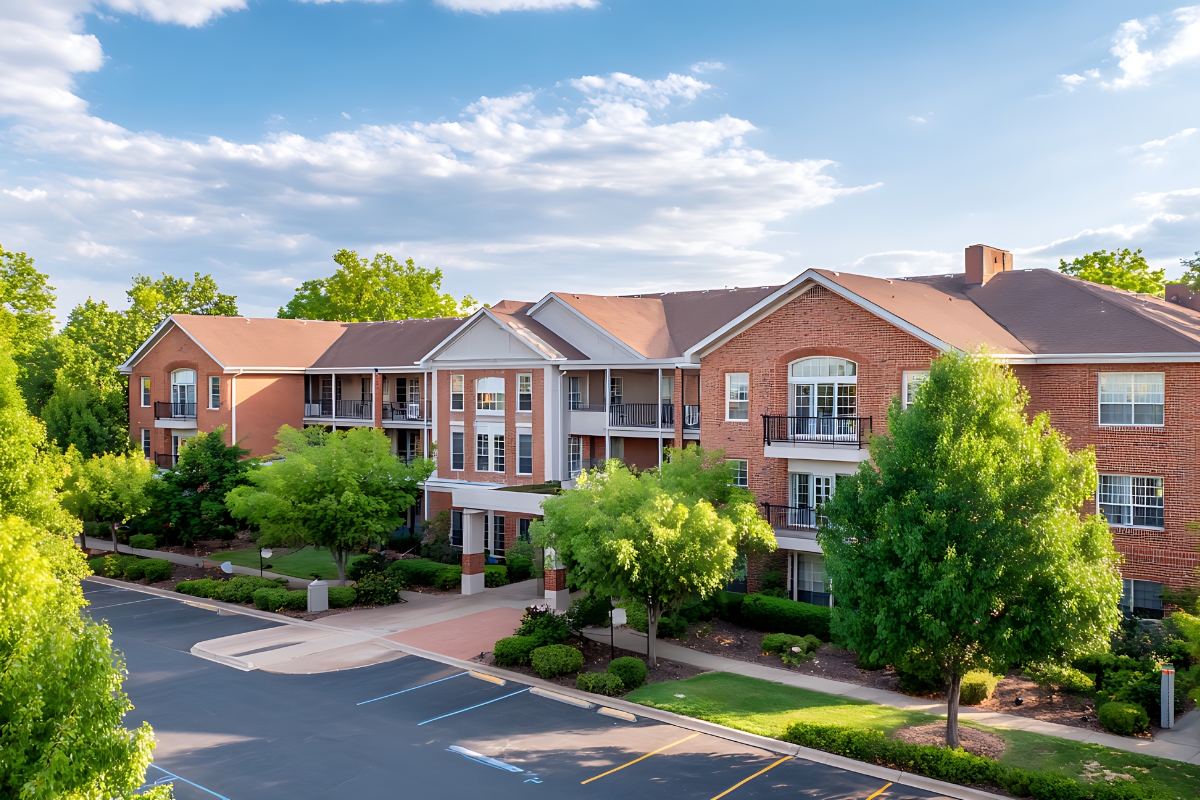
The residents in senior living facilities have specific and unique needs that HVAC systems must be able to meet. For owners and facility managers, it is crucial that the operational efficiency of HVAC systems can maintain occupant comfort and health while also keeping energy costs down. Whether designing or implementing HVAC systems in senior living facilities, here are some key considerations that must be taken into account:
Senior Living Facility HVAC Requirements
Temperature
Older adults are more sensitive to temperature fluctuations due to reduced metabolic rates and circulation. For senior living facilities, ideal indoor temps should range from 72°F to 75°F. It is crucial the HVAC system can maintain consistent temperatures across rooms and zones to keep residents comfortable throughout the building. One option that is perfect for these facilities is zoned HVAC systems, like VRF systems, which allow for individualized temperature control. This enables residents and staff to adjust temps in bedrooms based on personal preferences, greatly increasing comfort and satisfaction on a per-resident basis. Maintenance-wise, facility managers should confirm calibration every 2 years to prevent phantom temperature complaints.
Air Quality
Air quality is vital to senior care facilities as residents are particularly vulnerable to airborne particles, pollutants, or odors. Using energy recovery ventilators (ERVs) can improve indoor air quality (IAQ) by exchanging stale indoor air with fresh outdoor air. Adopting high-efficiency filters, like HEPA (High Efficiency Particulate Air) filters or MERV 14 or higher filters, also ensures pollutants are caught before infiltrating the air. No matter the filter type used, it is vital they are replaced on an appropriate schedule (often quarterly) so their effectiveness is not diminished. Demand-controlled ventilation (DCV) allows you to adjust airflow based on occupancy, so this is a great option for these types of facilities where occupancy varies greatly in rooms throughout the day, such as in dining halls. DCV increases ventilation when rooms are occupied but decreases it when rooms are vacant, meaning you save on energy while still maintaining air quality.
Humidity Control
Maintaining proper humidity levels is crucial to both occupant health and comfort. Ideal indoor humidity is 40-60%. Low humidity levels can lead to discomfort from dry skin and eyes, and also dries out mucous membranes, which then increases susceptibility to colds, the flu, or other respiratory issues. On the other hand, high humidity can promote the growth of mold or dust mites, further impacting air quality. Due to the importance of humidity in senior care facilities, humidifiers or dehumidifiers should be serviced as the heating or cooling season approaches so you don’t experience any downtime.
Noise Control
To maintain comfort and not disturb residents, particularly those with cognitive impairments, it’s necessary these facilities utilize quiet equipment. The optimal choice is to install terminal units in bedrooms that operate below 35 dBA to avoid disruptions to sleep. The placement of equipment is also worth consideration, so systems can operate in areas less likely to be heard.
Infection Control
One of the major requirements of HVAC systems in senior living facilities is equipment or designs that stop the spread of infection. Some facilities need negative pressure rooms for residents with contagious illnesses, so they require specific ventilation control. In negative pressure rooms, more air is pumped out of the room than supplied into it, creating lower air pressure where pathogens cannot escape as easily. Facilities also typically need separate exhaust systems to prevent cross-contamination. One option for infection control is to utilize engineered ultraviolet germicidal irradiation (UV-C) lights systems in HVAC, which kill mold, bacteria, and viruses in the air that comes into the system. Another option is bipolar ionization (BPI), which is a technology that uses electrical wires to generate positive and negative ions in the air that then attach to airborne particles, making them heavier and more easily trapped by air filters. Both UV-C and BPI systems must be maintained to provide the intended protection for building occupants.
Efficiency
HVAC system efficiency is important not just for reliability but for keeping down energy costs that can then be allocated to other care needs. VRF systems, while ideal for individualized temperature control, are also highly efficient, with low lifecycle costs, minimal maintenance required, and best-in-industry compressor warranties. ERVs not only improve IAQ but have low utility costs by recovering energy from outgoing air. Continuous operation of HVAC systems is vital to senior living facilities due to the impact on comfort and health. Because of that, these facilities require emergency heating and cooling systems in case of power outages. Redundant units are also valuable as they take over in case the primary unit fails.
Safety and Compliance
Senior living facilities have specific safety and compliance standards which must be met. It’s best to review ASHRAE Standards for Health Care Facilities to make sure your HVAC systems are compliant. It’s also best practice to keep up on proper documentation on equipment or maintenance.
There are a variety of factors to consider regarding HVAC systems in senior living facilities. It’s best to determine the specific needs of your facility and ensure your HVAC systems can meet them. Preventative maintenance is also key to preventing downtime of systems that are crucial to the health and comfort of residents. In addition, be sure your facility is supplied with replacement inventory of important parts such as filters and Condair cylinders for humidifiers.