
What Are HVAC Belts, and What Do They Do?
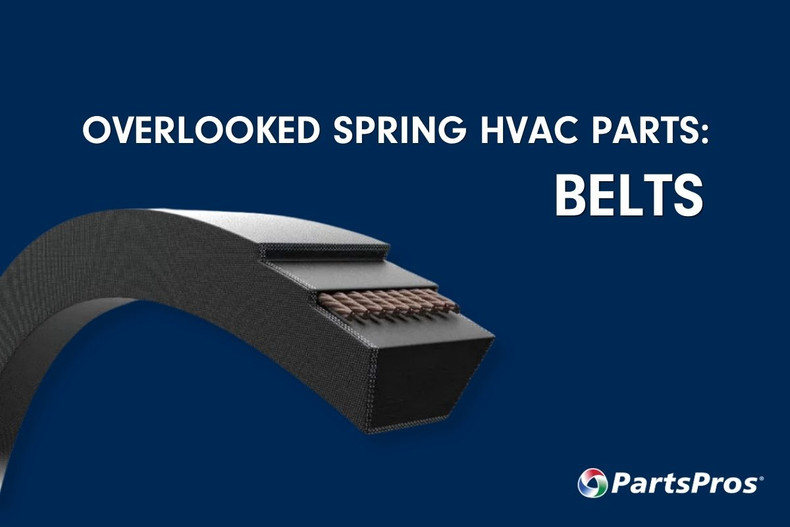
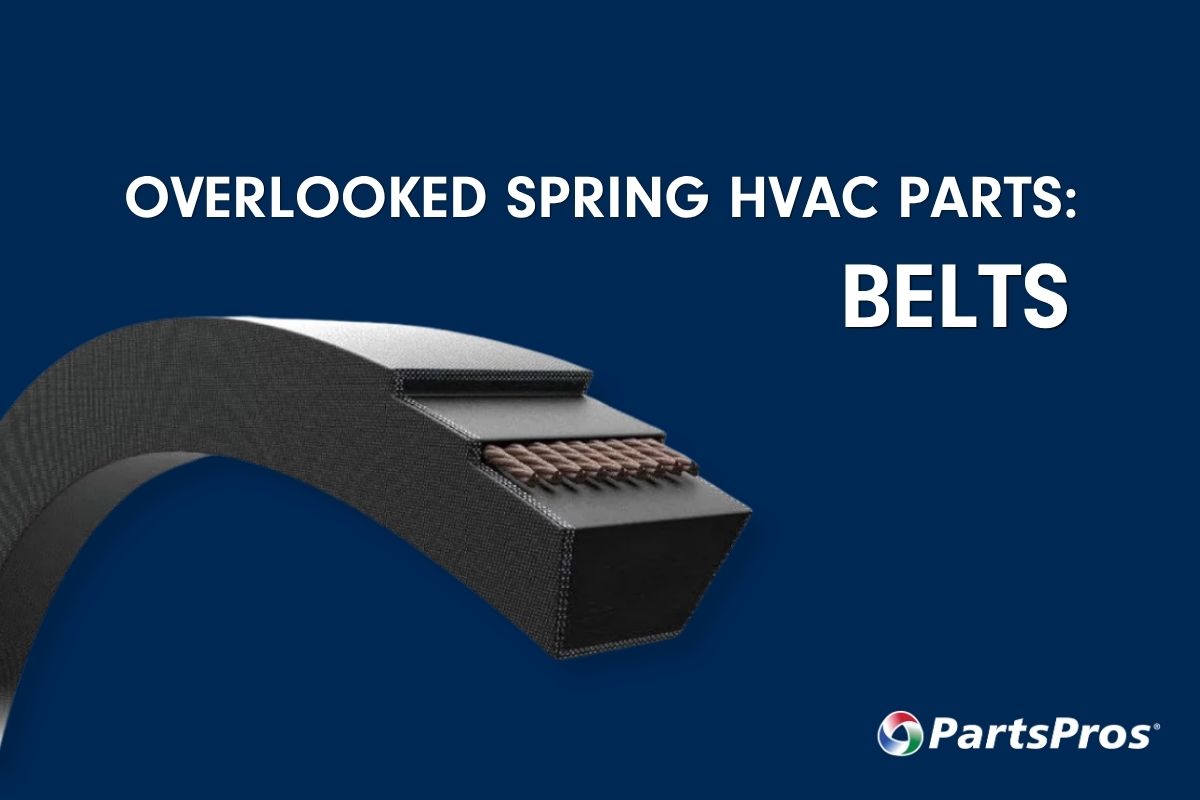
HVAC fan belts are a vital component of HVAC equipment. Belts transfer motor power to blowers or compressors in systems like air handlers, rooftop units (RTUs), exhaust fans, and cooling towers. Their influence on power means they directly affect motor load, energy use, and airflow, as measured in CFM (Cubic Feet per Minute). Most belts are made of reinforced rubber which is ideal for resisting heat, oil, and ozone.
Common HVAC Belt Types
- Classic V-Belts (A, B, C, D, E series) – The most common belt. They have a trapezoidal shape and are wrapped in a fabric outer cover. These are used for standard-duty industrial HVAC blowers and fans.
- Cogged/Notched Belts (AX, BX, 3VX, 5VX series) – These belts have an edge with notches (cogs) that improve grip and flexibility, reduce heat buildup, and have a longer belt life. Ideal for small pulley diameters or continuous run systems.
- Fractional Horsepower (FHP) Belts – Light-duty belts designed for smaller, lower-horsepower HVAC equipment.
- Wedge/Narrow V-Belts (3V, 5V, 8V) – Narrower and deeper than classic belts, these provide higher power capacity and better efficiency, so they’re suitable for compact, high-load drives or multi-belt drives where space is limited.
- Banded/Joined V-Belts – 2 or more V-belts are joined by a single top band, designed for heavy-duty applications where individual belts may vibrate or whip.
- Synchronous/Timing Belts – Toothed belts that prevent slippage, used where precise speed synchronization is required.
- Adjustable V-Belts (Link Belts/Twist-Link Belts) – Modular belts that can be linked via polyurethane and polyester segments. Unlike fixed-length belts, these can be adjusted to any length. Useful for easier installation, temporary repairs, or as a replacement for hard to find or old sizes.
HVAC Belt Type Selection Rule of Thumb
Correct belt selection involves matching cross-section, length, number of grooves, and sheave pitch diameter, as well as understanding the demands of the application.
- If the unit runs all day, choose cogged belts over traditional wrapped belts.
- If the pulley is small, avoid non-clogged belts.
- If the belts keep failing early, inspect the sheaves before upsizing belts.
- Never mix belt types or replace only one belt in a matched set.
- Belt codes indicate size, e.g. “A” belt is 1/2” wide and “B” belt is 21/32” wide.
- Do not use adjustable v-belts for high horsepower/high power situations or multi-belt systems.
Common Problems in HVAC Belts
HVAC fan belts are consumable parts that degrade over time and require replacement. Problems with belts lead to reduced airflow and effectiveness, raise operating costs without improving comfort or performance, and can cause damage to other components that can then lead to overall system failure. As belts wear and slip, they can lose 2-5% efficiency, which increases over time. Typical issues with HVAC belts include:
- Cracking, glazing, and fraying: Belts age and weaken as they are subject to heat, ozone, or improper tension.
- Squealing at startup: Caused by under-tensioning or misalignment. Another cause could be belt contamination.
- Reduced airflow/overheating motor: When belts slip or are stretched beyond accurate adjustment range, they’ll cause the motor to lose CFM, which can lead to overheating issues.
- Premature belt failure: Often caused by worn or misaligned sheaves.
- Uneven wear in multi-belt drives: Occurs when belts are not replaced as a matched set.
HVAC Belt Maintenance
Because failed or inefficient belts can have such negative impacts on HVAC equipment, performing maintenance is an important and easy way to improve system reliability and efficiency. Compared to motors, bearings, or other essential components, belts are low-cost, easy to inspect, and easy to replace. Inspections are necessary as a good indicator of belt integrity, as visual belt damage can appear before a full failure. However, it’s useful to know that many belt failures can be traced back to tension problems and misalignment, not just age. A quick glance at a belt for signs of aging may not suggest any problems, but that doesn’t mean the belt is operating as it should. Even belts that may appear in good condition should still be replaced regularly. ASHRAE recommends routine inspections and quarterly replacement of all HVAC belts.
The best time to perform maintenance of belts is during spring startup, as winter inactivity can increase risk of brittle or cracked belts. Post-summer maintenance is also advised as belts can slip after experiencing higher cooling loads and longer runtimes, which leads to reduced airflow and higher energy use. Outside units like RTUs may require more frequent inspections as they are at a greater risk of belt aging due to impacts from temperature swings and moisture.
Here’s a quick inspection checklist for HVAC belts. You can also download the checklist and a step-by-step replacement guide below:
- Check belt surface for cracks, glazing (smooth or shiny sections), fraying, or chunking.
- Verify belt tension against manufacturer recommendations.
- Inspect sheaves for wear, wobble, or buildup.
- Confirm pulley alignment (axial and angular).
- Look for signs of belt dust or rubber residue.
- Ensure all belts in multi-belt drives match in size and age.
Download Belt Inspection Checklist and Replacement Guide
You can purchase replacement HVAC belts, sheaves, and bearings for your HVAC equipment from us. If you need help identifying and selecting your replacement HVAC belt, contact LONG PartsPros at (855) 566-4778 today